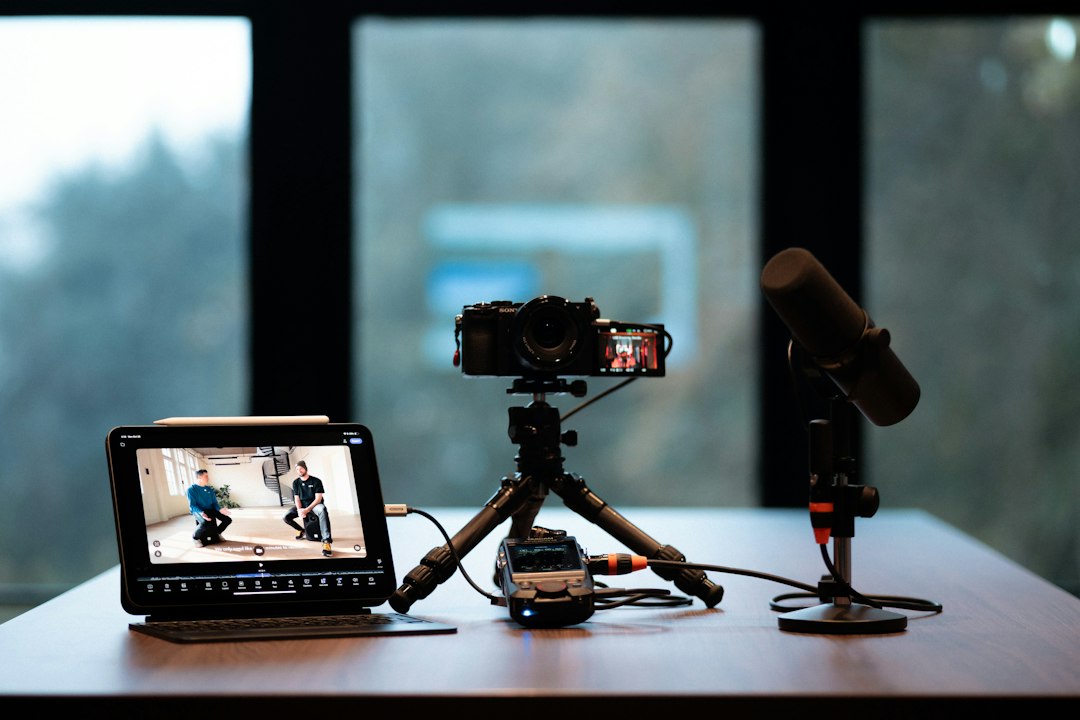
Real-time video makes an AI digital persona feel present, but the engineering objective is not to trick viewers into believing every pixel came from a live human. It is to deliver responsive, legible interaction while giving creators control over their likeness and users control over what happens in a call. That requires more than an appealing avatar demo.
Start with three explicit promises
The first promise is identity: the interface states that the character is an AI persona, with a creator identity or licence explained where relevant. The second is interaction: the app explains which incoming text, voice or pictures can be processed and whether a human is listening. The third is control: both parties can pause or end an experience, report misuse and change relevant permissions. These promises belong close to the call control panel, not hidden inside a product page. In creator-owned digital replicas, distinguish scripted promotional videos from automated live responses. User trust decreases when a synthetic character silently implies the creator is online, or when an AI-generated recommendation appears to be the creator’s personal endorsement.
Define a measurable latency budget
Consider a hypothetical target of 1.2 seconds between a user’s completed spoken turn and the start of a persona reply. Allocate 180 milliseconds to final speech recognition, 350 to response selection, 220 to speech synthesis, 150 to animation preparation and 300 to transport and device buffering. These are engineering design assumptions, not universal measured performance. Instrument each component separately with device, network and region identifiers. Report p50 and p95 rather than a single average. A product could have a fast median while leaving users on slow mobile networks repeatedly waiting. If the total budget is missed, a visible listening or composing state can be kinder than an ambiguous frozen smiling face.
Use standards without confusing transport and experience
The W3C WebRTC Recommendation of 13 March 2025 defines APIs that support real-time media and data exchange. Its presence in a system does not establish a guaranteed response time or a particular digital-human effect. The W3C Media Capture and Streams Candidate Recommendation Draft dated 12 November 2026 describes browser interfaces for requesting access to microphones and cameras. A creator video studio should request only needed devices and test denied permission, missing hardware, Bluetooth route changes and device switching. The application must handle these states at product level: permission denial should offer text interaction where possible, rather than a blank screen or repeated permission dialog.
Protect the likeness in creative tooling
A studio needs controllable framing, lighting and style without pretending that any alteration is authorised. Each template should maintain a link to the creator’s approved image and audio permissions. Store approval for face motion, voice generation and promotional reuse separately. A new hairstyle can be an ordinary creative option; impersonating a different person or fabricating their endorsement is not an acceptable default. If a user requests a non-approved transformation, route it to creator review or refuse it. Keep public preview content distinguishable from private source captures. Revoke credentials and delete obsolete private inputs under a documented policy when the creator withdraws the relevant right.
Build safe recovery rather than endless retries
Test at least five disruptions: Wi-Fi to cellular handover, microphone withdrawal, camera refusal, server timeout and a low-memory device closing the app. Preserve conversation state only when storage settings allow it. Distinguish a temporary video-path failure from ending the social relationship: a clear switch to text or audio can preserve context without forcing a user to start over. Prevent duplicate charges when a retry creates a second session. Every session should carry an idempotency token and a visible status such as connecting, active, degraded, ended or disconnected. Do not display an active connection while an actual media stream has already ended.
Make accessibility part of the persona
Some users depend on captions, selectable text, audio-only controls or generous response intervals. Test whether captions correspond to the current speaker, whether visual reactions have nonvisual descriptions when meaningful, and whether buttons can be activated through assistive technologies. A fast animated face should not be the only indicator that a new message arrived. When background motion is decorative, offer reduced-motion handling. A user with captions enabled should not have to repeat that preference every time if they permit it to be remembered. Keep the preference distinct from emotionally personal long-term conversational memories, which deserve their own consent and deletion controls.
Measure quality with an honest study
Recruit participants across device and network conditions and randomize an interaction order: high-fidelity video, reduced-data video and text fallback. Ask them to complete a meaningful task, not merely rate attractiveness. Track first-response delay, task completion, user-perceived agency, disclosure comprehension and successful call termination. Report dropped sessions and users who decline the video permission. Document the tested avatar version and content moderation settings. The NIST AI Risk Management Framework, released in January 2023, encourages systematic identification and evaluation of risks across design and use. A trustworthy digital persona studio should be able to show both the delightful cases and the cases where it transparently stepped down to a safer mode.
Sources
- W3C WebRTC Recommendation, 13 March 2025
- W3C Media Capture and Streams, Candidate Recommendation Draft, 12 November 2026
- NIST AI Risk Management Framework, 26 January 2023
Original editorial analysis, 19 November 2026. Worked examples are illustrative; verify terms for the actual product and jurisdiction.