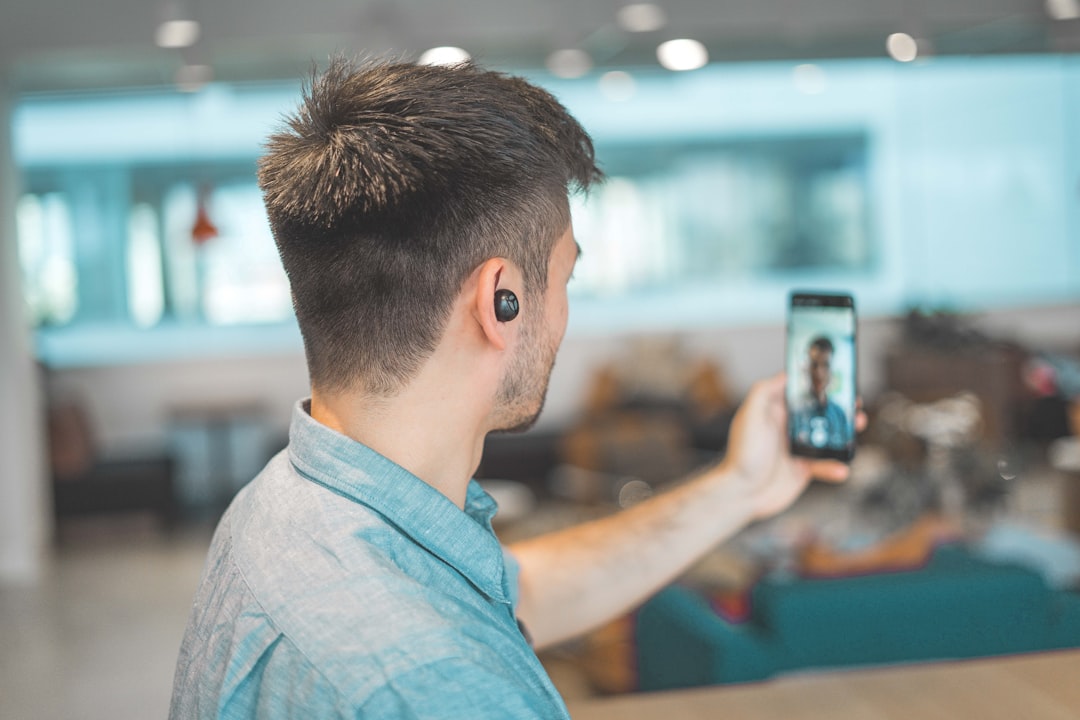
Real-time AI video companions do not need to generate every frame from scratch. Most conversations can be represented with a small number of reusable behavioral states such as idle, listening, speaking and emotional reaction. The quality of the experience depends less on how many states exist than on whether the transitions feel timely, coherent and appropriate to the conversation.
A state-machine architecture makes this behavior explicit. It gives the product predictable visual responses, lower latency and more controllable costs while still leaving room for fresh generation when a moment truly benefits from novelty.
Start with a compact set of states
The first version does not need dozens of animations. A practical library can begin with warm idle, attentive listening, speaking, positive reaction, concern, thinking and transition states.
Each state should have multiple variants so the character does not repeat the exact same blink, nod or head movement. Variation matters because repetition becomes obvious during long sessions, especially when the same loop resets at identical intervals.
The goal is to cover the common rhythm of conversation with stable assets before spending compute on rare or highly specific behaviors.
Idle should feel alive without demanding attention
Idle is the state users may see for the longest time, so it should be subtle. Small breathing motion, natural blinking, occasional gaze shifts and restrained posture changes are usually enough.
Too much idle movement makes the character appear restless. Too little creates the feeling of a paused video. The right balance depends on persona: an energetic character may move more, while a calm companion should remain visually quieter.
Idle variants can also reflect context. A late-night scene may use slower movement than a playful daytime interaction, but the character should still remain recognizably the same person.
Listening needs responsiveness, not theatrical reaction
Listening is more than waiting for the user to stop speaking. Eye contact, small nods and micro-expressions can communicate attention before the AI has generated a response.
The system should avoid reacting strongly to isolated words while the user is still talking. A premature smile or shocked expression can feel wrong if the final meaning of the sentence is different. Low-confidence listening behavior should stay near neutral until the conversational intent is clearer.
This makes listening an important latency tool. The companion can appear present while speech recognition and language generation continue in the background.
Speaking should coordinate voice, lips and body motion
The speaking state has the highest synchronization requirements. Lip movement needs to align with audio, but body motion also matters. Repeated head bobbing or exaggerated gestures can distract from otherwise good lip sync.
A useful pipeline knows the approximate audio duration before committing to the animation sequence. Short acknowledgements can use one speaking variant, while longer answers may need multiple motion segments to avoid obvious looping.
The broader trade-offs between reusable and generated video are discussed in AI Video Companion Architecture.
Emotional reactions should be proportional
Emotional states are powerful because users notice them immediately, but they are also easy to overuse. A binary mapping from “positive” or “negative” text to a large reaction produces cartoonish behavior.
Instead, the system can use both emotional category and intensity. Mild amusement might trigger a small smile, while a highly positive moment supports a larger reaction. Serious or ambiguous content can remain restrained until the model has higher confidence.
Duration matters too. A reaction should decay back toward neutral so one emotional moment does not contaminate the next several turns.
Transitions deserve their own design
Many visual failures happen between states rather than inside them. A character can snap from idle to speaking, teleport its hands or change posture abruptly because two assets do not share a compatible starting pose.
Transition states or blending rules can smooth those changes. The system may cross-fade, interpolate motion or briefly return to a neutral bridge before entering the next state.
Testing should focus on common state pairs: listening to speaking, speaking to reaction, reaction to idle and scene change to speaking. Those transitions appear repeatedly in real use and can have a large effect on perceived quality.
Use dialogue state to drive the visual state machine
The visual layer should not guess independently from raw text. A shared conversation state can tell it whether the user is speaking, whether the AI has begun generating, the emotional confidence of the response and whether a special activity is active.
This creates more predictable behavior. If the language system marks a response as thoughtful but low-confidence emotionally, the video layer can choose a calm thinking state rather than inventing an expressive reaction.
Fresh generation should be reserved for exceptional moments
Reusable states cover routine interaction well. Fresh image or video generation is most valuable for explicit user requests, new outfits, location changes, celebrations, special greetings or emotionally important moments where novelty adds clear value.
This hybrid approach keeps latency and cost under control while preserving the sense that the companion can still create something new. State machines handle the baseline presence; generation handles the memorable exceptions.
Measure state quality in real conversations
Useful metrics include reaction latency, lip-sync mismatch, repeated-animation complaints, transition failures, identity drift and compute cost per engaged video minute. Teams can also track how often users regenerate or switch out of video mode after a poor reaction.
Long-session testing is important because repetition and transition problems may not appear in short demos. A state library that looks good for two minutes can become obviously mechanical after twenty.
Bottom line
A well-designed AI video companion does not need infinite motion. A compact state machine with strong idle, listening, speaking and emotional behaviors can deliver presence quickly and cheaply, especially when transitions and timing are treated as first-class product problems. Fresh generation should enhance the moments that matter instead of carrying the entire conversation.