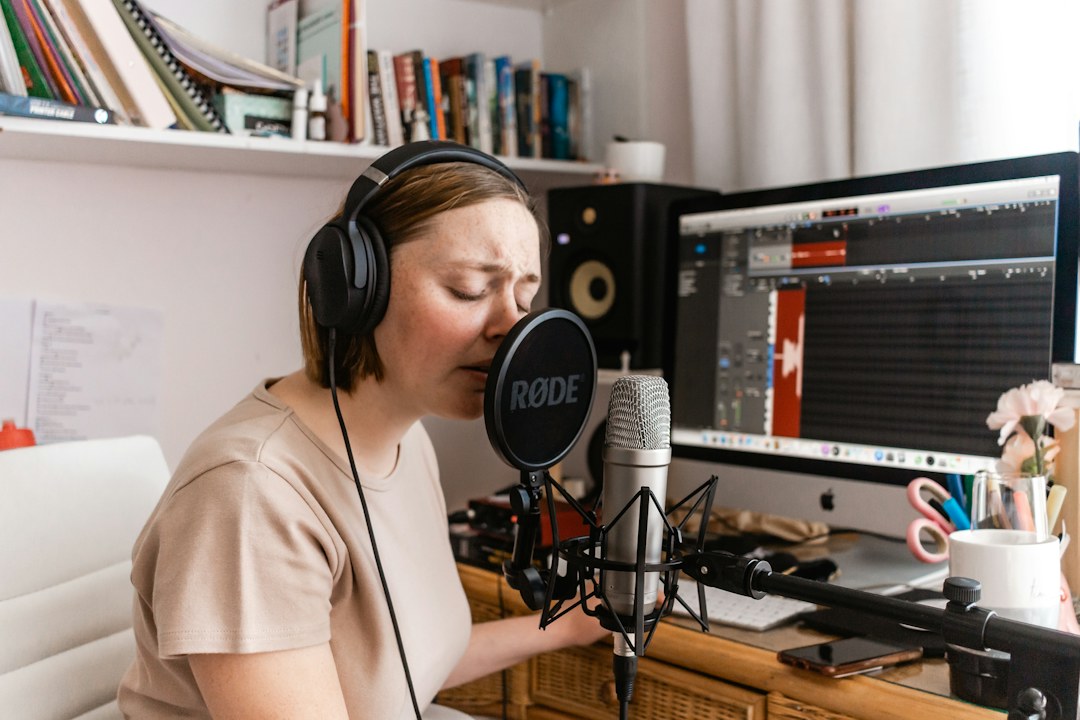
Creator AI voice rights deserve careful verification and clear license scopes.
A creator’s voice is the part of an AI digital twin that audiences may find most convincing—and the easiest component to misunderstand as a personal endorsement. As platforms move beyond text into real-time speaking avatars, consent needs to survive model training, marketing reuse, revenue sharing, exports and account deletion. ElevenLabs’ official documentation and the US Federal Trade Commission’s consumer warnings provide two useful starting points, but operational trust requires more than quoting their policies.
Voice Permission Is a Workflow, Not a Single Checkbox
A creator may agree that a platform can use their voice for a particular fan experience without consenting to every future use of a synthetic copy. The relevant product decision is therefore not simply whether someone clicked Accept during onboarding. It is whether the application can show which person authorized which recording, what the license permits, and whether the generated voice is being used in a context the speaker reasonably understood. A checkbox does not prove that an uploader owns the identity behind a sample. Verification and permission need distinct steps.
ElevenLabs’ voice-cloning documentation places especially strong emphasis on ownership and verification: its Professional Voice Cloning flow is for a person’s own voice, and that verified voice can be shared privately with collaborators. Its October 9, 2026 use policy addresses unauthorized impersonation and other misuse. These are vendor rules, not a universal legal standard, but they expose a practical distinction every digital-twin platform should make: the individual proving their identity is different from a third party asserting they possess permission. A legitimate creator relationship needs both to be traceable.
Technical reference: ElevenLabs verification and cloning documentation.
Separate Identity Proof, Voice Rights and Distribution Rights
Three records should be maintained separately. Identity proof tells the service that the account belongs to the real speaker. Voice rights explain what source samples may be processed and for what purpose. Distribution rights define where the resulting synthetic performances may appear, for example a private fan conversation, a public character profile, an advertisement, or a dubbed video. A brand manager authorized to schedule a creator’s posts does not automatically have the power to clone the creator’s voice for arbitrary product endorsements. That authority must be established independently.
This distinction matters when a creator is represented by an agency. The agency may manage commercial negotiations while the creator retains voice and likeness rights. An approval interface should identify the individual speaker, authorized legal entity, geographic scope, permitted modalities, expiration date and revocation route. The platform should preserve the contract version and timestamp rather than reducing the agreement to a generic boolean field. If permission changes later, the operational system needs enough structured information to determine which characters, videos, speech models and active campaigns are affected.
Treat the Original Recording as Sensitive Material
Voice training or reference recordings can carry far more than linguistic information. They may reveal a home environment, background conversation, accent, health clues or incidental third-party voices. Collecting a thirty-second sample does not justify keeping every raw file indefinitely. Limit access to the minimum people and systems required, store recordings separately from ordinary customer-service attachments, and log who has retrieved them. Platform operators should also explain whether the original recording, model representation, generated outputs and debugging traces follow different retention schedules.
Security controls must address the very moment an employee exports a clip to troubleshoot a failed clone. Workstations, temporary object-store links and support tickets are common places for sensitive media to spread outside intended boundaries. Use short-lived URLs, role-based access, encryption in transit and storage, and explicit audit events. Where a service uses an external provider, map which party stores source audio and who can initiate deletion. An apparently successful removal from the front-end is inadequate if a retrievable source file still sits in a shared processing bucket.
Build Revocation into the Production Pipeline
A creator who disables an AI twin should not have to contact five different internal teams. The product needs an identifiable revocation event with a clear operational definition. For example, once permission expires, it may immediately stop generating new voice audio, block new public promotion, and flag previously published licensed outputs for an agreed contractual review. Historical consumer transactions or records that must be retained for lawful accounting require separate treatment. A promise to delete everything instantly can be misleading when some records legitimately remain.
Revocation should propagate through caches, inference services, queued jobs, mobile app previews and marketing assets. Teams can test this with a staging character: revoke access while a synthetic audio batch is queued, then verify no new files are delivered after the cutoff. Record the elapsed time between a creator’s revocation request and the last disallowed generation. This is a more meaningful governance metric than the number of policy pages the company has published. Give creators status updates and a documented appeal route for disputed requests.
Make the Difference Between a Creator and Their Avatar Visible
Fans deserve to know who is speaking. A realistic synthetic voice does not mean a real person is present in the conversation. A product should distinguish automated replies, approved prerecorded messages and live creator sessions with language that remains visible throughout the experience. This matters particularly when the conversation includes commercial promotions. Marketing approval is a separate decision from the initial permission to train a model, and the platform should be able to identify the source of that approval.
The US Federal Trade Commission has described how realistic synthetic voices can undermine familiar identity cues. Product operators can reduce confusion with clearly labeled synthetic performances, verified creator profiles, independent support channels and rapid review of suspicious requests. An organization should also track the share of active synthetic voices covered by valid permissions and measure how quickly a request to withdraw authorization is applied to new output. These operational measures demonstrate more than a reassuring promise on a signup page.
An authentic digital twin is not merely one that sounds accurate: its authority should be verifiable, limited in scope and reversible.
Sources and Further Reading
- ElevenLabs voice cloning documentation
- ElevenLabs use policy (October 9, 2026)
- FTC voice-cloning consumer information
Cover image: Sincerely Media / Unsplash photo-1601814837661-ce2832acd413.