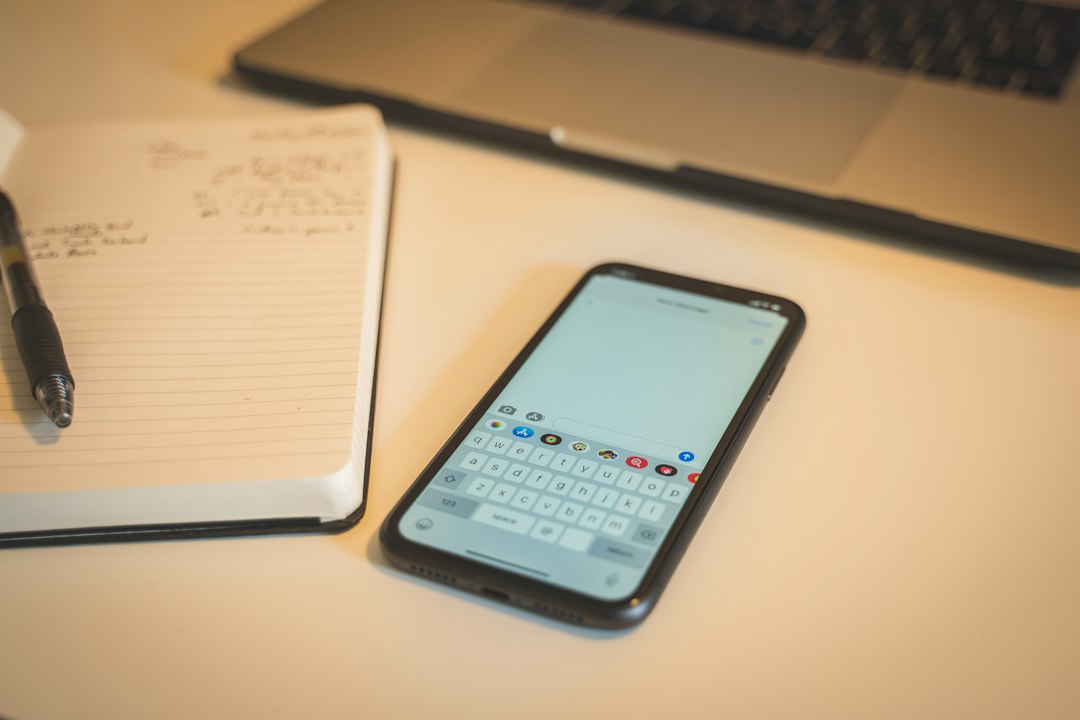
A mainstream AI social application may offer text exchanges, synthetic voice and real-time digital-human video, yet those experiences produce very different notification risks. A message about a creator’s public update is not equivalent to a direct conversational response, and neither should inherit permission to announce a private relationship milestone on a locked screen.
Notification consent needs two layers, not one switch
A mainstream AI social application may offer text exchanges, synthetic voice and real-time digital-human video, yet those experiences produce very different notification risks. A message about a creator’s public update is not equivalent to a direct conversational response, and neither should inherit permission to announce a private relationship milestone on a locked screen. The first layer is the device platform’s authorization; the second is the application’s own purpose-specific preference. Apple documents requesting notification authorization through UserNotifications, while Android documents a runtime POST_NOTIFICATIONS permission on Android 13 and later. Neither permission should be interpreted as consent to display every kind of personal information. A product team should record a versioned preference for each notification class and allow users to revoke it without losing access to ordinary chat. This proposal describes a design pattern rather than a claim that Tuikor AI currently implements it.
Design a preference matrix around social meaning
Divide outbound events into at least four classes: account security, requested conversation replies, creator broadcasts and optional engagement prompts. Attach a default channel, preview policy, delivery window and user override to each class. A user might allow security messages immediately, private replies silently, public creator announcements in a daily digest, and engagement prompts never. The matrix must also distinguish a voice-session invitation from an automatic voice call; a push alert should never start microphone capture or stream video. Separate the triggering actor from the subject: a digital twin’s apparent social enthusiasm does not justify urgency. A reasonable configuration screen should preview examples that look like actual operating-system notifications, including the lock-screen version. Use a plain-language sentence beside each switch: who sends this, what will appear, and whether it contains personal text. Test whether people can predict the next notification before they accept the setting.
Quiet hours require time-zone and emergency rules
A quiet-hours scheduler is a small distributed-systems problem. Store the user’s selected IANA time zone, not just a fixed UTC offset, because seasonal transitions change local wall-clock times. Resolve future deliveries from that zone and preserve the original requested local window. If the person crosses borders, offer a clear choice between home-time quiet hours and device-local quiet hours; do not silently move the window. A pending batch may contain an urgent account-recovery alert and three nonurgent chat nudges. Security should follow a separate, narrowly documented exception policy rather than the engagement system’s generic priority flag. Queued messages need deduplication and expiration so a phone does not release ten outdated prompts at 08:00. Record requested delivery time, actual platform handoff and whether the app suppressed the item. These are different measures: reaching a push gateway does not establish that the user saw a notification.
Protect relationship context in notification previews
Long-term memory can make AI social experiences more coherent, but it can also make a lock-screen preview reveal details that were meant for one conversation. Do not surface inferred emotion, a user’s nickname, private photographs, quoted voice transcripts or relationship scores by default. Prefer a neutral summary such as “You have a new message” until the person explicitly enables richer previews. The private preview must stay consistent across Apple and Android devices, paired smartwatches and desktop mirroring. If a user disables sensitive previews inside the application, avoid relying solely on the operating system’s global hide-content feature. Build tests for a locked device, a shared tablet, screen recording and notification history. A revoked sender or blocked digital personality should not reappear through a scheduled campaign. Minimizing the payload also reduces the exposure if a push vendor or analytics integration records metadata unexpectedly.
Measure agency instead of chasing open rates
Notification experiments often optimize clicks, but click-through rate alone can reward intrusive behavior. Pair it with notification-disable rate, quiet-hours override frequency, complaint rate, session-start intent and a seven-day voluntary return measure. Pre-register safety guardrails before a randomized test: for example, no campaign may include sensitive transcript excerpts, and all optional alerts must have a one-step opt-out. A hypothetical experiment could compare a daily digest with three separate push prompts among consenting adults. The numbers in that example are a test design, not observed results. Review effects for people with different language preferences and assistive settings. Distinguish device-level rejection from in-app suppression; a permission denied by Android or Apple is not an invitation to repeatedly nag the user. NIST’s 2023 AI Risk Management Framework offers a voluntary govern-map-measure-manage structure for turning these choices into accountable checks.
Release gates and an auditable outcome
Before deployment, run a matrix of timezone changes, daylight-saving transitions, offline queues, deleted accounts, blocked contacts, multi-device sign-ins and switching from text to voice or video. Inspect the final notification payload on both platforms rather than trusting copy from a product specification. A reviewer should be able to trace each visible alert to one event category, one active preference version and one permitted preview level. Make it possible to disable an entire class without disabling critical recovery messages. Publish a transparent explanation of why alerts are sent and how the person can stop them. The success criterion is not maximum message volume; it is fewer unwanted interruptions while maintaining access to deliberately requested social conversations. Digital-human technology can make messaging more expressive, but the human user’s attention and privacy remain the scarce resources that the interface must respect.
Sources
- Apple Developer, Asking Permission to Use Notifications (platform documentation; accessed 10 Nov 2026)
- Android Developers, Notification Runtime Permission (Android 13 guidance; accessed 10 Nov 2026)
- NIST, AI Risk Management Framework 1.0 (26 Jan 2023)
Editorial photograph: Oscar Mucyo / Unsplash.